
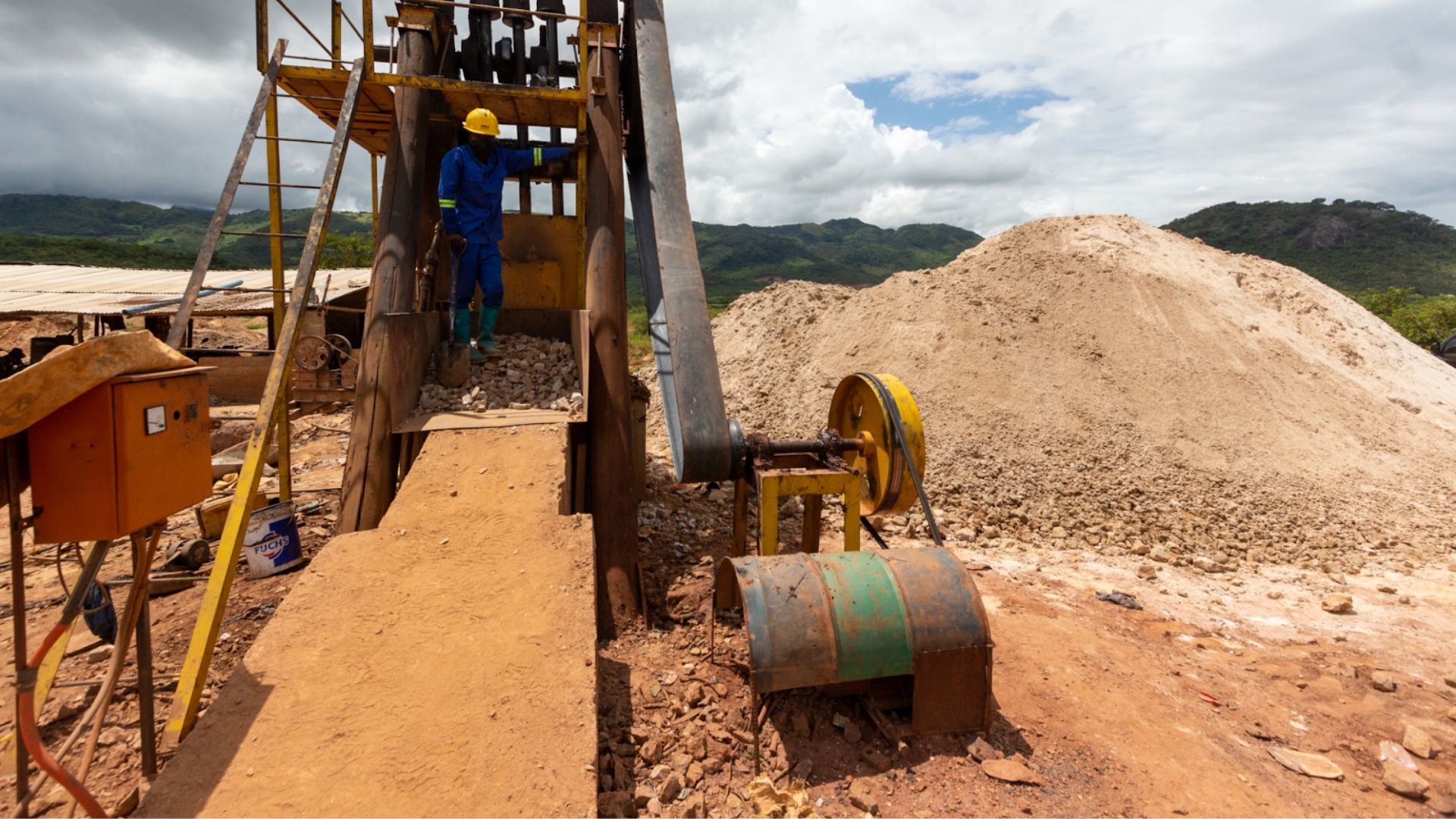
Artisanal mining is the backbone of many communities across Sierra Leone, Liberia and Guinea (Conakry), providing livelihoods while supplying critical minerals to global markets. This article explores how practical, sustainable mining practices can increase gold and mineral recovery, protect the environment and create lasting economic benefits for miners, communities and responsible partners such as Waymark Metals.
Across Sierra Leone, Liberia and Guinea, artisanal and small scale mining sits at the heart of rural life. For many communities, gold mining is not simply an economic activity but a generational livelihood, supporting families, local traders and entire villages. Alongside gold, minerals such as tin, chromium and manganese also play an increasingly important role in regional economies and global supply chains.
Yet artisanal mining faces a moment of change. International buyers are demanding higher standards of environmental responsibility and traceability. Governments are under pressure to formalise the sector. Communities themselves are asking how mining can deliver lasting benefits without damaging land and water for future generations.
At Waymark Metals, we see this shift not as a threat, but as an opportunity. When sustainability is approached practically and collaboratively, it strengthens productivity, improves incomes and creates more resilient mining communities. Responsible artisanal mining, particularly in West Africa, can balance commercial success with environmental stewardship.
Why Sustainability Is Becoming Central to Artisanal Mining
For decades, artisanal mining across West Africa has relied on traditional methods. These techniques are often effective at a basic level but can lead to unnecessary environmental damage and low recovery rates. Rivers become clogged with sediment, pits are abandoned, and valuable gold is lost during processing. Over time, this erodes trust between miners, communities, governments and international buyers.
Sustainability in this context is not about imposing industrial-scale rules on small miners. It is about improving how mining is done, step by step, in ways that increase output while reducing harm. When miners recover more gold from the same ground, use less water and rehabilitate land as they go, everyone benefits.
Cleaner Gold Recovery Starts with Better Water Use
Water is central to artisanal gold mining, yet it is often the most poorly managed resource. In many areas of Sierra Leone, Liberia and Guinea, miners depend directly on rivers and streams, diverting water for washing and sluicing. This creates conflict with downstream users and leaves miners vulnerable during dry seasons.
Modern but simple water recycling systems can transform this process. By allowing sediment to settle before water is reused, miners reduce their dependence on fresh water and improve washing efficiency. Cleaner, controlled water flow improves gold capture in sluices and shaking tables, meaning higher recovery rates with less effort.
Waymark Metals has seen firsthand how these systems improve daily output while also easing tensions with local communities. Sustainable water use becomes both an environmental and a commercial advantage.
Reducing Harmful Practices Without Reducing Income
Few issues in artisanal gold mining are as sensitive as mercury. While it remains widely used, its health and environmental impacts are well documented, and its presence increasingly limits access to reputable international markets.
The transition away from harmful chemicals does not happen overnight. Instead, it begins with better gravity separation and improved processing techniques that capture more gold before any chemical stage is reached. As recovery improves, reliance on mercury naturally falls.
A miner working with Waymark-supported practices in eastern Sierra Leone explained the change simply:
“Before, we lost gold in the washing and didn’t realise it. Now we recover more with less work. Our river is cleaner, and we earn more at the end of the week. This helps our families and reduces problems in the village.”