
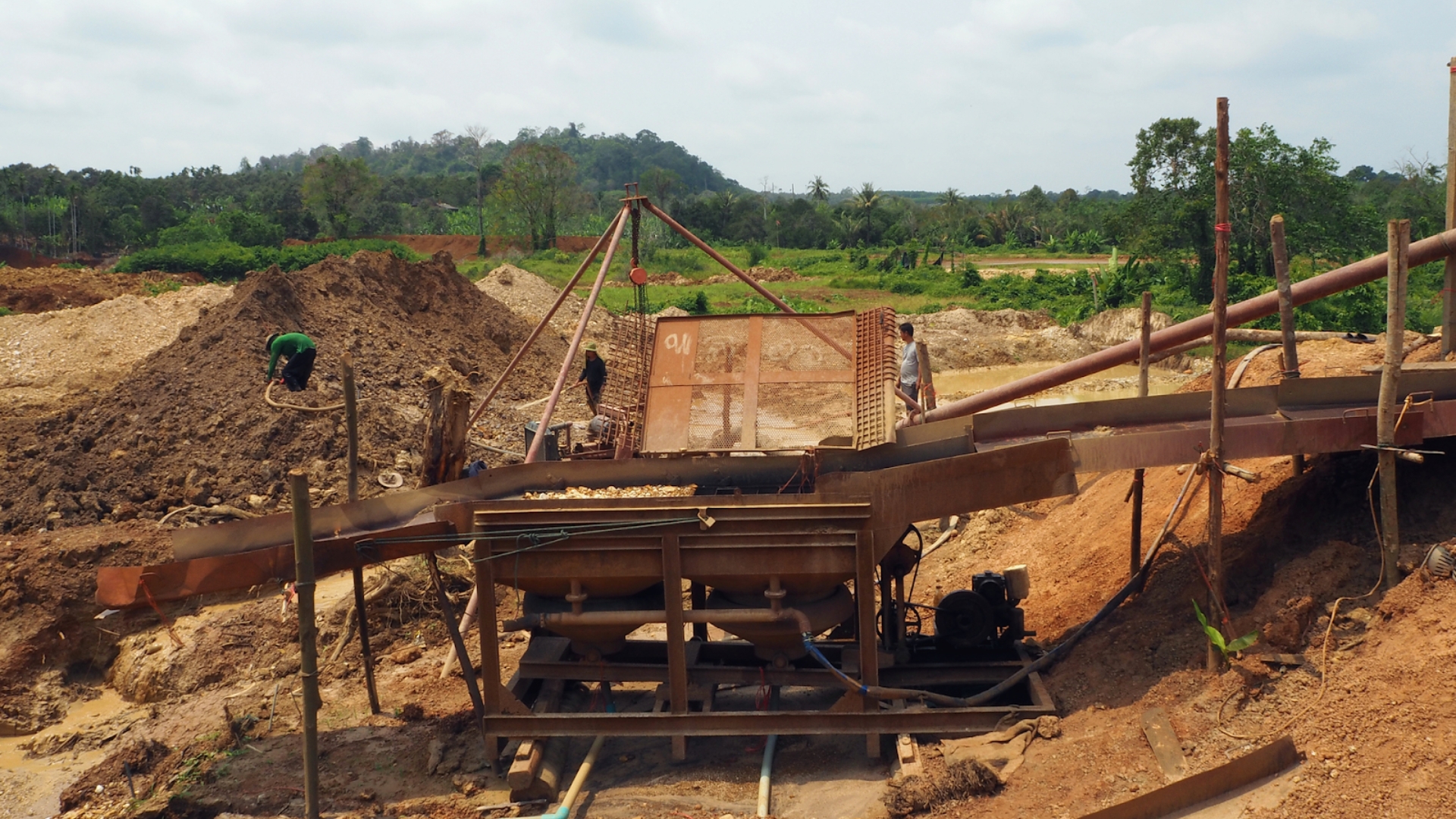
For artisanal miners across West Africa, innovation does not arrive in the form of large drilling rigs or billion-dollar exploration budgets. It arrives in small, practical changes that make daily work safer, more efficient and more profitable. From better targeting of ore to improved processing and safer working practices, modern technology is increasingly within reach of artisanal and small scale miners. This article explores how modest innovations are transforming artisanal mining, helping miners work smarter rather than harder, and how Waymark Metals supports this shift.
Across Sierra Leone, Liberia and Guinea, artisanal miners produce significant volumes of gold, tin, chromium and manganese using limited tools and resources. The challenge has never been a lack of effort, but a lack of information and appropriate equipment. When innovation is scaled to the reality of artisanal mining, it becomes a powerful driver of prosperity.
Innovation That Fits Artisanal Mining
In artisanal contexts, technology must be simple, affordable and robust. Complex systems designed for industrial mines rarely work in remote settings with limited power, infrastructure or technical support. The most effective innovations are those that solve immediate problems.
Small improvements, such as portable crushers, improved sluice boxes or simple water recycling systems, can significantly increase mineral recovery. These tools are easy to maintain and deliver immediate returns by reducing losses that previously went unnoticed.
A gold miner in eastern Sierra Leone explained the impact clearly:
“Before, we worked hard but lost gold without knowing. With better equipment, we recover more from the same ground. That changes everything.”
Better Information Means Less Wasted Effort
One of the greatest challenges in artisanal mining is deciding where to dig. Traditionally, this relies on surface signs, past workings or local knowledge passed down through generations. While valuable, this approach often leads to wasted effort and unnecessary land disturbance.
Today, even small miners can benefit from improved information. Handheld GPS devices, basic digital maps and shared geological data help miners understand patterns in mineralisation. In some areas, simple drone surveys provide aerial views of terrain, drainage and historic workings, allowing miners to plan more intelligently.
Waymark helps translate this information into practical guidance, ensuring that technology supports decision-making rather than overwhelming it.
Portable Processing Technology and Higher Recovery
Processing is where artisanal miners either capture value or lose it. Traditional methods can leave a significant portion of gold behind, reducing income and increasing environmental impact.
Portable shaking tables, improved sluices and better screening systems are examples of technologies designed specifically for small scale operations. These tools increase recovery rates without requiring complex infrastructure or chemicals.
In Liberia, miners using improved gravity separation have reported higher daily yields with less physical strain. Cleaner processing also reduces sediment discharge, improving relationships with surrounding communities.
A miner involved in one such operation noted:
“When processing improves, we earn more in the same time. We don’t need to rush or overwork. It makes mining more sustainable for us.”
Simple Technology That Improves Safety
Innovation for artisanal miners is not only about productivity. Safety-focused technology can be equally transformative. Better lighting for shafts, basic ventilation methods and improved pit supports reduce accidents significantly.
These are not expensive or complicated solutions, but they save lives. When miners feel safer, they work more confidently and consistently, reducing downtime caused by injuries.
Waymark Metals emphasises that safety technology and productivity go hand in hand. A safer mine is almost always a more efficient mine.
Water Management and Environmental Innovation
Water is central to artisanal mining, yet often poorly managed. Simple innovations such as settling ponds, recycled water systems and controlled flow channels dramatically reduce water use and contamination.
These systems are inexpensive to build and maintain, but their impact is significant. They allow miners to operate year-round, even during dry seasons, while protecting rivers and farmland.
A community leader in northern Guinea observed:
“When miners use water better, there are fewer problems with farms and fishing. Mining and the community can exist together.”
Shared Technology and Cooperative Models
One of the most effective ways to introduce technology into artisanal mining is through shared ownership. Equipment such as crushers, pumps or shaking tables can be owned collectively by mining groups or cooperatives.
This reduces individual costs and encourages better organisation. Shared technology also supports knowledge transfer, as miners learn from each other and adopt best practices more quickly.
Waymark Metals supports cooperative models that allow miners to access technology without taking on unsustainable debt.
Digital Tools and Market Access
Beyond the mine site, simple digital tools are changing how artisanal miners engage with markets. Mobile phones, digital scales and basic record-keeping apps improve transparency and trust.
Miners who can track production, understand pricing and communicate reliably with buyers are less vulnerable to exploitation. These tools also support traceability, opening doors to more stable and reputable markets.
For Waymark Metals, digital transparency is a cornerstone of responsible sourcing.
Technology as a Path to Prosperity
When innovation is introduced thoughtfully, the results are cumulative. Better targeting reduces wasted labour. Improved processing increases income. Safer working conditions reduce disruptions. Over time, mining becomes more predictable and sustainable.
A miner in western Liberia reflected on this progression:
“Small changes add up. We work smarter now, not just harder. That gives us hope for the future.”
Waymark Metals’ Role in Supporting Artisanal Innovation
Waymark Metals focuses on technologies that are appropriate, affordable and impactful. By working alongside artisanal miners, we help identify innovations that deliver real benefits rather than theoretical improvements.
Our approach is practical and grounded. We support miners in adopting tools and techniques that increase efficiency while respecting local knowledge and conditions. This partnership model builds trust and ensures that innovation leads to lasting change.
Conclusion: Innovation at the Right Scale
Innovation in artisanal mining does not require large budgets or complex systems. It requires understanding the realities miners face and applying the right tools at the right scale.
Across Sierra Leone, Liberia and Guinea, small innovations are already transforming how artisanal miners work, improving productivity, safety and environmental outcomes. When supported by responsible partners, these changes can lift entire communities.
Waymark Metals has established itself as a market leader by recognising that the future of West African mining lies not in imposing industrial solutions, but in empowering artisanal miners with practical technology that works. By helping miners innovate on their own terms, we are building more prosperous, resilient and sustainable mineral supply chains for the long term.
This article is part of Waymark Metals’ ongoing commitment to sharing insight on responsible mining, gold markets and sustainable development across West Africa. Further articles will explore traceability, artisanal miner partnerships, regional geology and the future of African gold.