
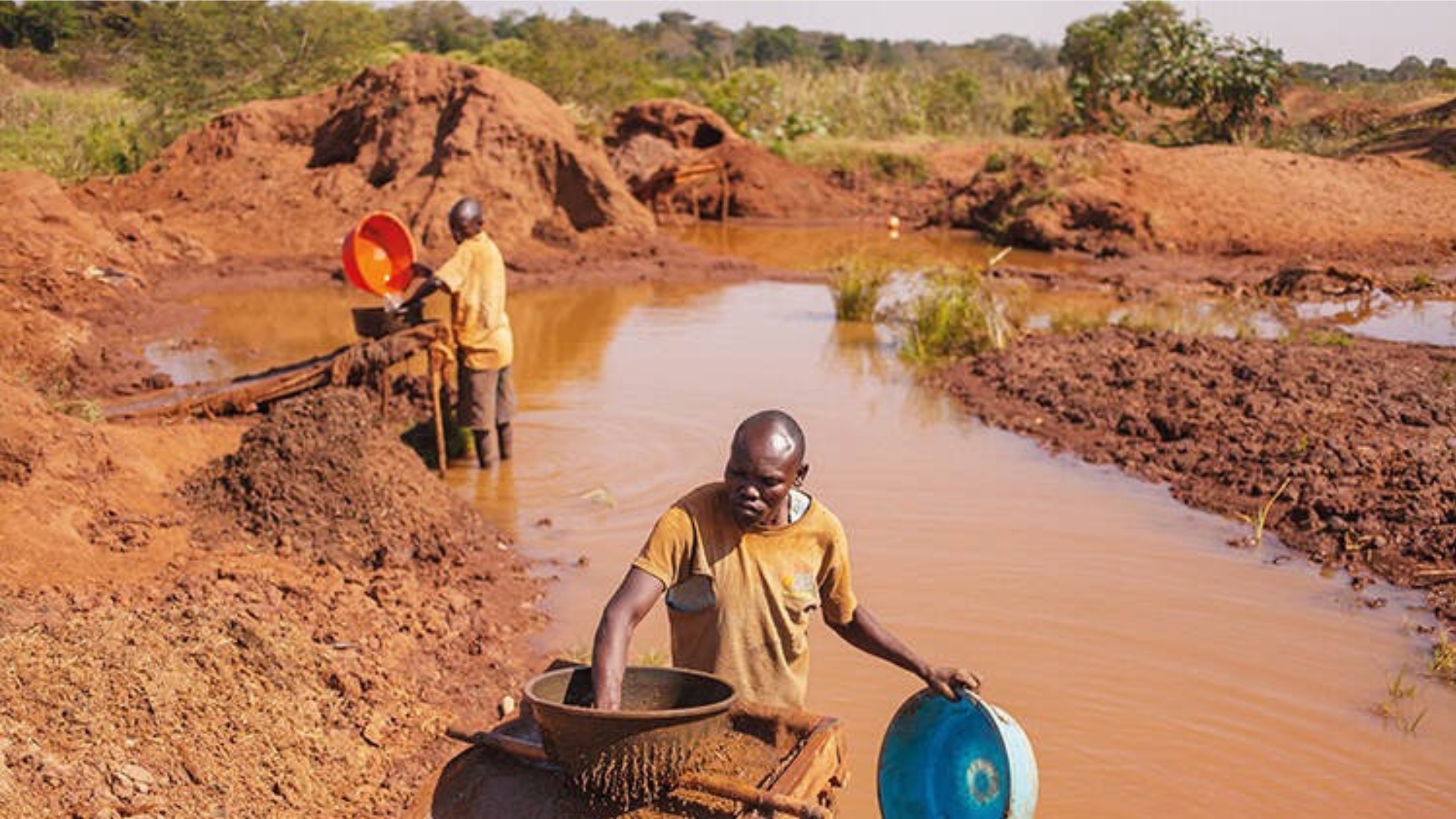
Mineral extraction in West Africa is often discussed in terms of export figures, global supply chains and international prices. Far less attention is paid to what happens at village level, where mining activity shapes daily life, household income and long-term opportunity. This article looks beyond the minerals themselves to examine how responsible extraction can support jobs, local businesses and regional development when it is done properly and with long-term intent.
Across Sierra Leone, Liberia and Guinea, artisanal and small scale mining is one of the most significant economic activities outside of agriculture. Gold, alongside minerals such as tin, chromium and manganese, provides income to hundreds of thousands of people, many of whom have few alternative sources of cash employment. When mining is responsibly managed and linked to transparent markets, its economic impact reaches far beyond the mine site.
At Waymark Metals, community impact is not a side effect of mining. It is a core part of how value is created and sustained.
Mining as a Foundation of Rural Employment
In many rural areas of West Africa, formal employment opportunities are limited. Artisanal mining fills this gap, offering direct work to miners and indirect livelihoods to a wider circle of people. A single gold mining site can support diggers, washers, transporters, traders, food sellers, mechanics and security providers.
In Sierra Leone’s interior, mining often provides the primary cash income in entire chiefdoms. Similar patterns exist in Liberia and Guinea, where seasonal agriculture is supplemented by year-round mineral activity. While incomes fluctuate, mining remains one of the few ways for rural families to pay school fees, medical costs and household expenses.
A miner in central Sierra Leone described the reality plainly:
“When farming is finished, mining keeps money coming in. Without it, many families would have nothing during the dry season.”
Supporting Local Businesses Beyond the Mine
The economic impact of mining extends well beyond those who work directly at the pit. Local supply chains grow around active sites, creating opportunities for small businesses that would not otherwise exist.
Markets expand to sell food, tools and clothing. Transport operators move ore, water and people. Local workshops repair pumps, generators and crushers. Even informal services, such as phone charging or accommodation for visiting traders, become sources of income.
Waymark Metals has observed that where mining relationships are stable and predictable, local enterprise flourishes. When miners receive fair prices and regular payments, money circulates within the community rather than leaving it immediately. This multiplier effect is one of the most powerful but overlooked benefits of responsible mineral extraction.
A shop owner near a mining area in northern Guinea explained:
“When mining is organised and buyers are reliable, people spend locally. My business grows, and I can employ others. It changes the whole village.”
Formalising Artisanal Mining Without Destroying Livelihoods
One of the challenges facing West African governments is how to formalise artisanal mining without undermining the livelihoods it supports. Heavy-handed regulation or unrealistic licensing requirements can push activity further into informality, reducing transparency and community benefit.
Waymark Metals works within national frameworks while recognising on-the-ground realities. By engaging directly with mining groups, supporting basic record keeping and encouraging compliance step by step, informal operations can gradually integrate into the formal economy.
This approach benefits governments through improved oversight and revenue, while protecting miners from exploitation and sudden disruption. It also creates a clearer pathway for long-term community investment.
Case Study: Gold Mining and Community Stability in Sierra Leone
In parts of eastern Sierra Leone, gold mining has long been associated with instability, seasonal migration and environmental damage. In recent years, however, more structured engagement with artisanal miners has begun to change this picture.
By improving processing efficiency, reducing disputes over pricing and introducing clearer buying practices, miners have been able to work more consistently. With steadier income, families are less reliant on short-term migration, and communities retain skills and labour locally.
A community leader near a gold-producing area reflected on the shift:
“Before, people came and went, and nothing stayed behind. Now, when mining is done better, families invest here. Children stay in school, and we plan for the future.”
Women, Youth and Inclusive Economic Impact
Mining is often perceived as a male-dominated activity, but its economic footprint is far broader. Women play critical roles in processing, trading, catering and local commerce linked to mining sites. Young people, particularly those with limited access to formal education, often rely on mining-related work as an entry point into the cash economy.
Responsible operators can strengthen inclusion by recognising these roles and supporting safer, more stable working environments. When income becomes more predictable, families are better able to balance work with education, reducing the long-term social cost of poverty.
Waymark Metals recognises that inclusive economic impact is not achieved through slogans, but through consistent, fair engagement that respects how communities actually function.
Infrastructure and Regional Development
While artisanal mining does not build highways or power stations on its own, it often plays a critical role in sustaining local infrastructure. Roads maintained for mining access are used by farmers and traders. Transport links created to move minerals connect remote villages to regional markets.
Over time, these connections can transform isolated areas into active economic zones. In Liberia and Guinea, mining corridors frequently become hubs of trade, linking agriculture, commerce and services in ways that persist even as individual sites are exhausted.
Responsible mining practices ensure that this infrastructure benefit is not short-lived, but supports broader regional development.
Stability Through Predictable Income
Perhaps the most important economic contribution of responsible mineral extraction is stability. In regions where incomes are unpredictable, communities are more vulnerable to conflict, exploitation and environmental degradation.
By creating transparent supply chains and fair pricing structures, Waymark Metals helps reduce income volatility for miners. This predictability allows households to plan, save and invest, turning short-term earnings into long-term progress.
A miner in western Liberia captured this impact clearly:
“When prices are fair and buyers are consistent, we stop living day to day. We can think about building a house or sending children to school.”
Why Responsible Buyers Matter
The positive economic impact of mining depends heavily on who buys the minerals and how. Opportunistic buying can extract value quickly while leaving communities worse off. Responsible buyers invest time, trust and systems that allow value to remain locally.
Waymark Metals positions itself as a long-term partner rather than a transactional trader. By working across Sierra Leone, Liberia and Guinea with consistent standards, we help create mining ecosystems that support growth rather than depletion.
This approach also benefits international clients, who increasingly seek assurance that the minerals they purchase contribute positively to local development.
Measuring Impact Beyond Export Volumes
Export figures tell only part of the story. The real measure of mining’s economic impact lies in stronger communities, functioning local businesses and reduced vulnerability to shocks.
While challenges remain, responsible mineral extraction has the potential to support inclusive growth across West Africa. The key is alignment between miners, communities, governments and market-facing companies.
Conclusion: Local Impact as a Measure of Leadership
In West Africa, mineral wealth is inseparable from community wellbeing. When extraction is poorly managed, the costs are visible and lasting. When it is done responsibly, the benefits ripple outward, supporting jobs, businesses and regional stability.
Waymark Metals has built its position as a market leader by understanding this reality. Our focus on transparency, fair engagement and long-term partnerships ensures that mineral extraction delivers value at every level of the supply chain, from the miner at the pit face to the international client.
Economic impact is not an abstract concept. It is the school that stays open, the business that expands and the community that plans for the future. By placing local development at the centre of our operations, Waymark Metals demonstrates that responsible mining is not only possible in West Africa, it is the foundation of sustainable success.
This article is part of Waymark Metals’ ongoing commitment to sharing insight on responsible mining, gold markets and sustainable development across West Africa. Further articles will explore traceability, artisanal miner partnerships, regional geology and the future of African gold.